
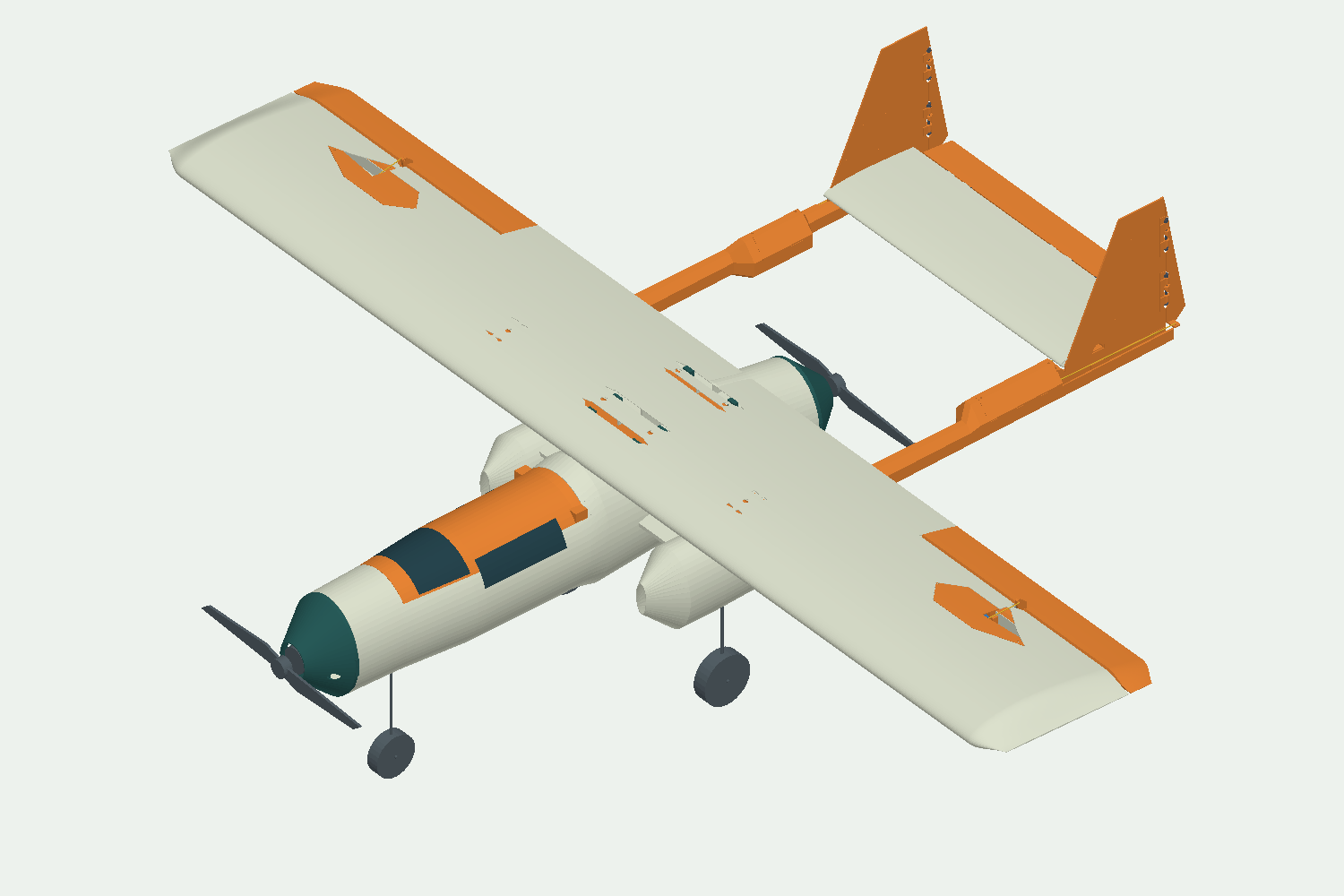
Start with the type of aircraft
| Project | Size and design | What you add | Build consideration |
|---|---|---|---|
| Breeze 400 | 400 mm hand-launch biplane | No motor or radio specified | Check the wing locks and alignment. |
| Meadow 620 | 620 mm electric RC; 18 printed airframe pieces | Motor, propeller, ESC, receiver, servos and battery | Check the wing joiner and selected electronics fit. |
| Relay 1200 P | 1,200 mm push-pull twin | Two power systems, retracts and radio equipment | More mechanical assemblies and control setup. |
| Tern 1100 | 1,100 mm flying boat; 19 printed airframe pieces | Electric power system and radio equipment | Hull seams, buoyancy and water protection require checks. |
Part counts describe printed airframe pieces, not purchased hardware. Use the numbered plate list in the current download for the complete build.
A printed structure still needs a plan
“No carbon tubes” does not mean interchangeable materials or an aircraft made only from plastic. Meadow, Relay and Tern still need their specified hardware and electronics. Check the equipment list before ordering: motor mounting, servo size and battery position are part of the design.
Wing connections transfer load between printed sections. Preserve the supplied orientation, wall settings and joint overlap. A lighter material may change both stiffness and dimensional fit; a good-looking CAD model cannot establish the strength of your print.
Choose a first print that answers a question
- Open the current model’s build guide and locate the wing connection or another representative mating joint.
- Print the first specified build plate in the intended material.
- Check alignment and contact surfaces before gluing. Record the material, orientation and measured fit.
- Continue through the remaining numbered plates, checking each mating joint as you build.
The print-fit guide explains what to record. For RC projects, compare the printed mounting space with the actual equipment before completing the airframe.
Which project should you explore first?
Breeze removes electronics from the build. Meadow offers a small conventional RC layout. Relay suits a builder interested in a twin-motor aircraft and retracts. Tern adds the separate challenges of a boat-shaped hull and water operation.
These remain prototype projects with physical validation outstanding. An easy-to-understand assembly is useful, but is not a claim of proven flight performance. Read the model’s current status and choose the work you want to investigate.