
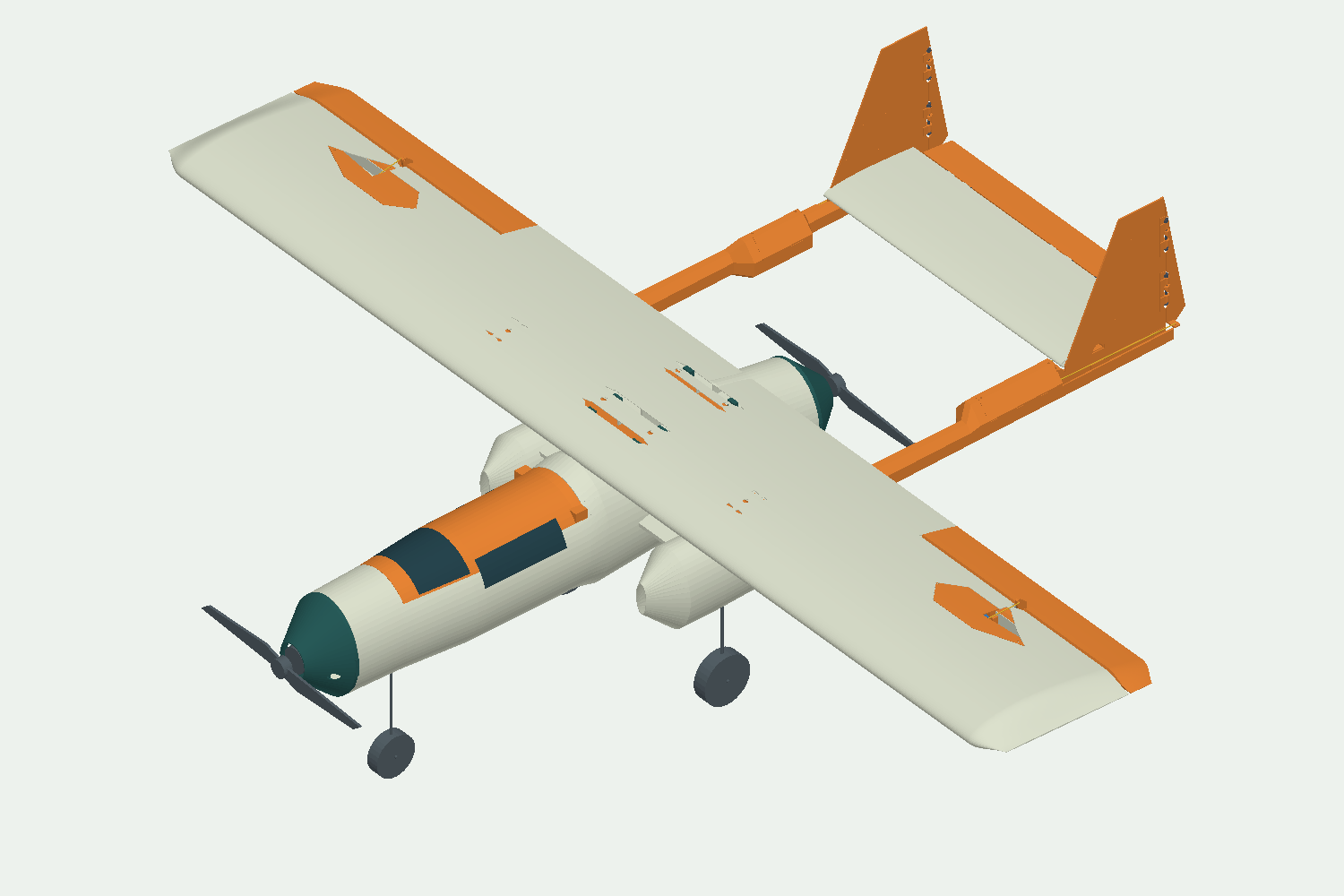
An exploded view separates parts so you can see what sits behind a skin or inside a mount. It is most useful when you move between the separated and assembled positions, rather than leaving everything fully spread apart.
1. Begin with the assembled model
Open the viewer directory and select your project. Drag to look around the model, or use the available camera controls. Notice the wing roots, body joints and access panels. This gives you a reference for where each component belongs when the build is complete.
2. Separate the parts gradually
Move the “Separate parts” slider a little at a time. Partial separation can make a joint easier to follow than the fully exploded position. Look for the neighboring part and its mating surface, then return the slider to zero to check their relationship. The slider is also keyboard accessible: focus it and use the arrow keys.
3. Match the preview to your package
Keep the current print index and build guide open beside the model. Match part names, quantities and material groups before arranging a plate. Visible purchased hardware is an assembly reference, not necessarily a printable file. Viewer colors help distinguish components; they do not replace the material list.
4. Follow the guide’s order
Exploded movement is not an instruction to insert every part along that exact path. Read the assembly steps for joints, fasteners, glue areas and access requirements. A servo lead, nut or tube may need to be installed before an outer panel closes. For the Bolts, use the separate mount viewers for those steps.
5. Confirm on the bench
Print and dry-fit a representative joint. Check orientation, alignment and movement before applying adhesive. If a part only fits when forced or a joint rocks, pause and record the filename, material and measured gap. Printed fit depends on more than the CAD shape.
The Relay 1200 viewer is a useful place to explore a twin-boom layout. The Bolt PWC mount viewer shows a more focused assembly. Both complement the written guide; neither proves the structure has passed load or flight testing.